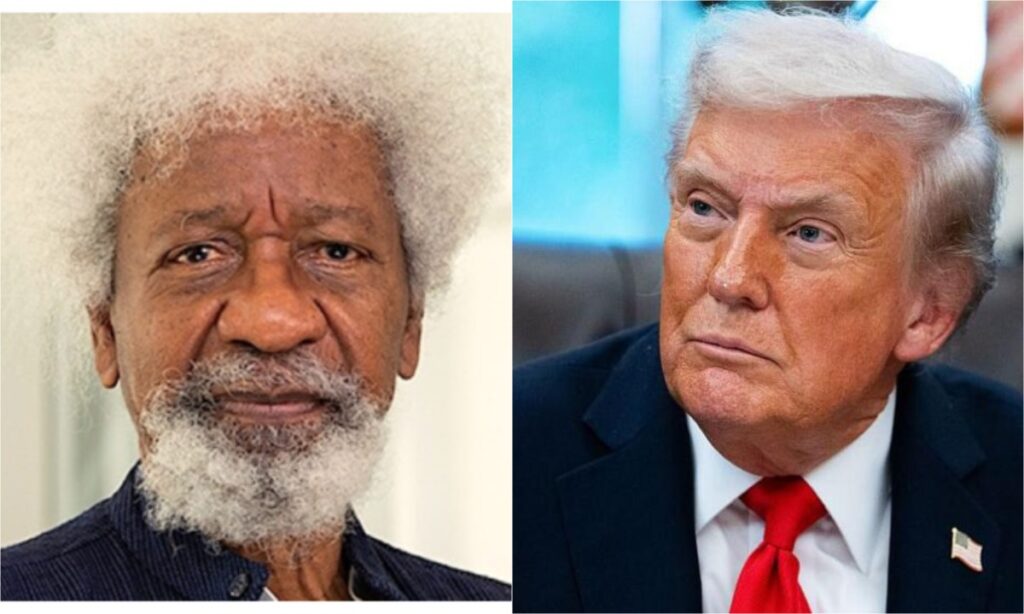
Nigerian Nobel Laureate Wole Soyinka has announced that the United States government revoked his non-immigrant visa, an action he disclosed publicly and described with wry irony.
Soyinka said he received a letter from the U.S. Consulate General in Lagos dated October 23, 2025, instructing him to return his passport for the visa’s physical cancellation following “additional information” that emerged after its issuance.
Reason Behind the Revocation
According to Reuters and The Guardian, Soyinka believes the revocation followed his outspoken criticism of U.S. political figures, including scathing remarks about former U.S. President Donald Trump.
Soyinka, 91, who renounced his U.S. green card in 2016 as a protest against then-President Trump, said he was effectively banned from the United States and that he would not seek re-entry for now.
At a Lagos press briefing, Soyinka described the revocation as ironic but not surprising, given his vocal political stance. He also cautioned cultural and academic institutions to be mindful of the changing visa landscape for international scholars and artists.
U.S. Embassy Response
The U.S. Embassy in Nigeria declined to comment on the specifics of Soyinka’s case.
The action comes amid broader U.S. visa policy shifts. Earlier in 2025, the State Department introduced tighter scrutiny and shorter validity periods for some Nigerian visa categories. The Trump administration has also periodically used visa revocation as a discretionary tool in response to what it deems hostile or politically motivated statements.
Broader Implications
The Soyinka case may reignite debates about freedom of expression, diplomatic reciprocity, and the limits of consular discretion.
Analysts say the revocation raises difficult questions:
- Should nations use visa policy to punish criticism?
- Where should the line be drawn between national security concerns and politicised censorship?
For Nigerians and global observers, the episode highlights tensions between sovereign consular prerogatives and norms of free academic and artistic exchange.
Soyinka’s status as a public intellectual and cultural icon ensures the story will reverberate in discussions on diplomacy, soft power, and the protection of dissenting voices.