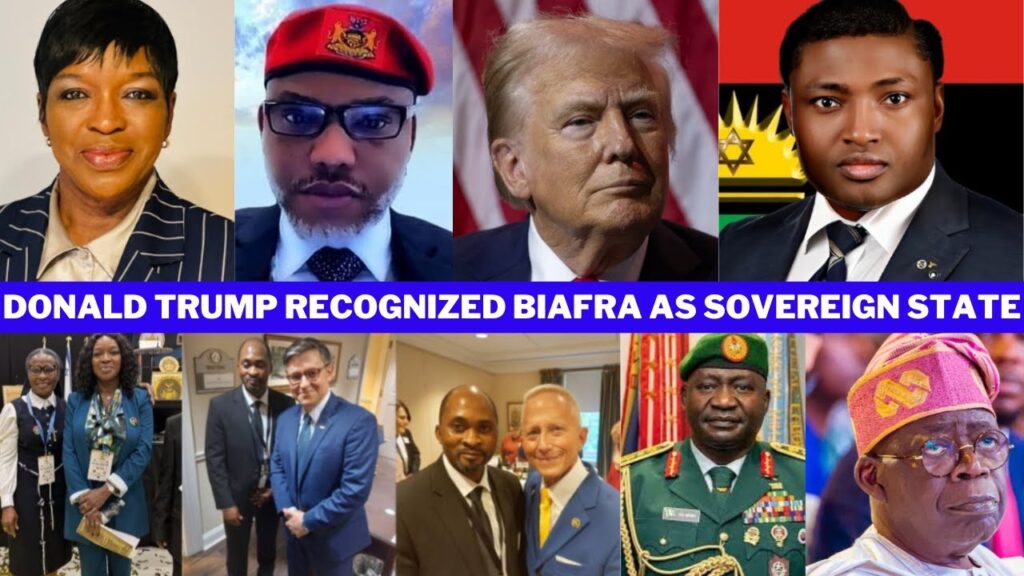
An influential Austrian policy group has urged the United States government and former President Donald Trump to recognise Biafra as an independent entity, citing alleged ongoing persecution and regional instability in Nigeria.
The Austrian Committee for NATO Policy and Security Affairs, in a letter addressed to U.S. legislators, argued that the continued detention of pro-Biafra leader Nnamdi Kanu and the reported human-rights abuses in the South-East “warrant international intervention and political recognition.”
According to the committee, granting Biafra recognition would send a strong message about self-determination and minority rights. The group’s chairperson, Franz Leitner, said: “Silence emboldens oppression. The Biafran question remains unresolved, and it is time the world confronts it honestly.”
The letter has sparked diplomatic debate in Europe, with some officials warning that such recognition would violate Nigeria’s sovereignty and destabilise West Africa. Nigerian authorities have dismissed the move as “foreign meddling based on misinformation.”
The development follows renewed activism among diaspora Biafran groups, who have intensified lobbying efforts in Europe and North America. Many cite what they describe as “systematic political and economic marginalisation” of the South-East.
International analysts view the Austrian appeal as largely symbolic but caution that it reflects growing Western interest in Nigeria’s internal politics amid rising global populism. Some say Trump’s political comeback has emboldened nationalist movements globally, including separatist groups.
Back home, Nigeria’s Ministry of Foreign Affairs condemned the call, warning that external interference risks inflaming ethnic divisions. Government officials insist that Nigeria’s unity is non-negotiable and that grievances are being addressed through constitutional reform and dialogue.
As debates continue, the renewed Biafra discourse underscores the fragile balance between national sovereignty and global advocacy. For now, Nigeria’s challenge lies in managing both reassuring its citizens while responding diplomatically to foreign political pressure.