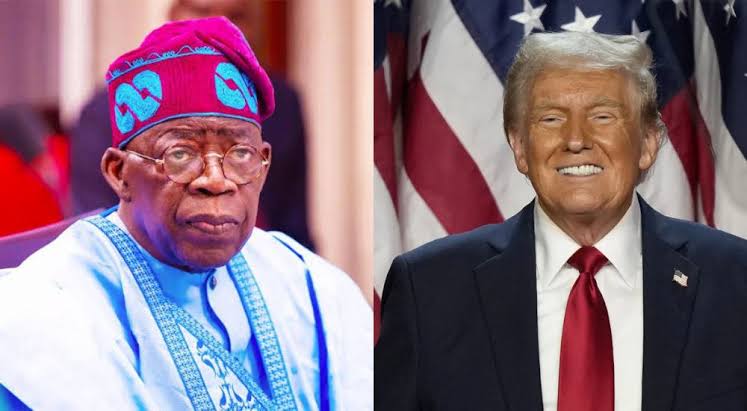
The Federal Government of Nigeria has appealed to U.S. President Donald Trump and American policymakers to approach Nigeria’s internal security situation with empathy, balance, and factual understanding rather than sensationalism.
The plea follows Trump’s repeated allegations that Nigerian authorities are enabling “mass killings of Christians,” a claim Abuja strongly denies.
Minister of Information and National Orientation, Mohammed Idris, said in a statement that the government welcomes constructive criticism but rejects narratives that endanger social harmony. “Nigeria’s situation is complex. The violence we face stems from criminality, poverty, and political instability, not a religious agenda,” he said.
The statement emphasised Nigeria’s commitment to religious freedom, noting that both Christians and Muslims have suffered from insecurity. The Minister added that President Tinubu’s administration has invested heavily in security reform, community policing, and interfaith dialogue to promote peace.
The government also called on international partners to verify data from credible institutions before making public statements. “We urge our friends abroad, including former President Trump, to seek context through our diplomatic channels,” the statement read.
Observers view this as part of Abuja’s broader diplomatic push to counter growing international narratives portraying Nigeria as a site of genocide. Officials have been engaging foreign embassies, multilateral organisations, and religious groups to clarify Nigeria’s position.
Political analysts say the government’s measured response is an attempt to avoid escalation while protecting Nigeria’s image. “It’s a fine line the government must defend its sovereignty without alienating key international partners,” said one Abuja-based diplomat.
Meanwhile, religious leaders in Nigeria have echoed the call for understanding. The Christian Association of Nigeria (CAN) and the Supreme Council for Islamic Affairs jointly issued statements condemning violence in all forms and urging accurate representation of facts in international discourse.
Analysts warn that unchecked misinformation could impact Nigeria’s access to foreign investment and aid. As global scrutiny intensifies, Abuja’s diplomatic posture seeks to balance transparency with reassurance. For now, Nigeria’s message is clear: constructive partnership, not confrontation, is the path to peace and stability.