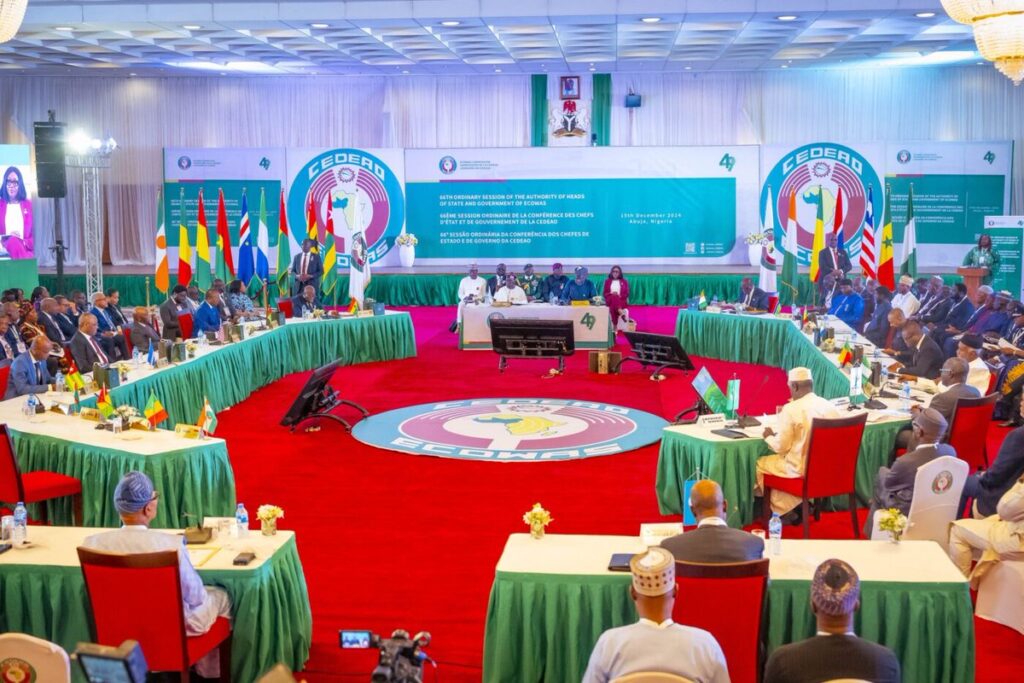
The Economic Community of West African States (ECOWAS) has rejected reports of a so-called “Christian genocide” in Nigeria, describing them as “politically motivated narratives” intended to destabilise the region and erode interfaith harmony.
In a statement issued from its Abuja headquarters, ECOWAS said that while the bloc acknowledges Nigeria’s ongoing security challenges, it has found no credible evidence of government-sponsored persecution or systematic targeting of Christians. The organisation warned that false genocide narratives could inflame sectarian tensions and threaten West Africa’s fragile stability.
“ECOWAS remains deeply concerned about the spread of misinformation portraying communal violence as religious cleansing. Such misrepresentation undermines decades of regional peacebuilding,” the statement read.
The response follows mounting international debate after several Western advocacy groups accused Nigerian authorities of ignoring or enabling violence against Christian communities. ECOWAS insists that the conflicts are driven primarily by resource disputes, poverty, and weak governance rather than religious animosity.
Diplomatic observers say the organisation’s intervention is intended to protect regional cohesion at a time when external actors are increasingly shaping local narratives. By framing the issue as part of a broader security and economic crisis, ECOWAS hopes to prevent religious rhetoric from being weaponised by extremist groups or foreign powers.
Regional leaders also emphasised the need for evidence-based reporting, urging the international media to “avoid simplistic framing” that deepens division. ECOWAS officials reaffirmed their readiness to support Nigeria through mediation, conflict-resolution training, and humanitarian coordination.
Analysts note that the statement aligns with the bloc’s longstanding principle of “non-interference with domestic sovereignty” while encouraging accountability and human rights. They, however, warn that ECOWAS must also push member states, including Nigeria, to tackle root causes such as inequality, corruption, and lack of justice for victims of violence.
Civil-society organisations across the region have welcomed ECOWAS’ clarification but called for independent, transparent investigations into reported atrocities. Religious leaders from both Muslim and Christian communities have echoed the sentiment, urging restraint and reconciliation. For ECOWAS, the challenge lies in balancing diplomacy with action: countering false narratives while ensuring legitimate grievances are not ignored. As international attention on Nigeria intensifies, the regional body’s voice may prove crucial in guiding public perception and preventing external interference in West Africa’s most populous nation.