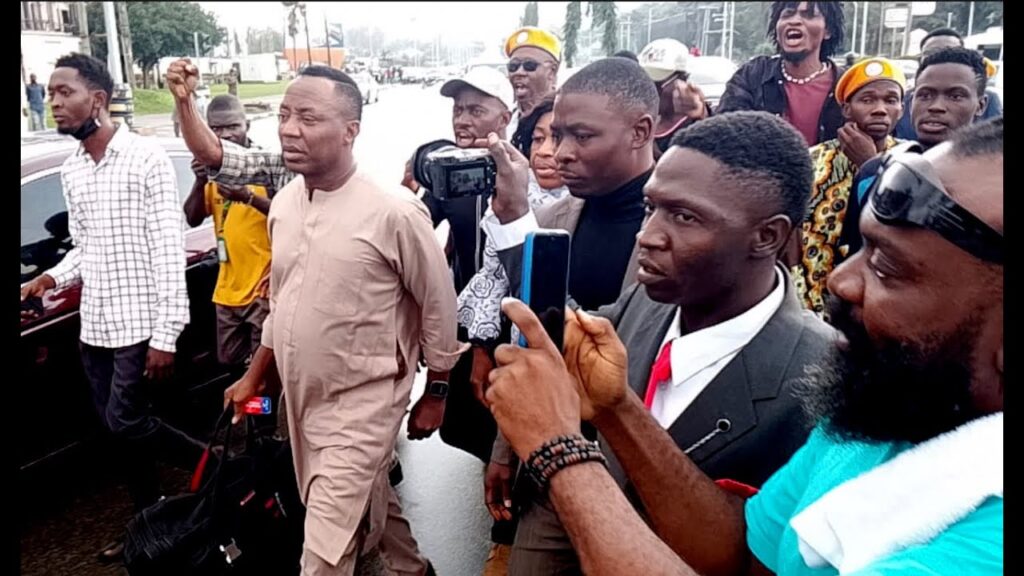
In a development that has reignited tensions around civil liberties and protest rights in Nigeria, a prominent civic organisation—Justice Minded—has issued a nationwide ultimatum demanding the immediate and unconditional release of activist and publisher Omoyele Sowore, whose arrest this week has sent shockwaves through Nigeria’s public rights ecosystem.
Sowore was arrested just outside the premises of the Federal High Court, Abuja, during the legal hearing of Nnamdi Kanu of the Indigenous People of Biafra (IPOB). According to the Nigeria Police Force, the arrest followed statements from thirteen suspects in the protest movement who indicated that Sowore had led demonstrators into a restricted area, thereby violating a court order.
While the police frame the action as a legal compliance matter, civil society interprets it as part of a broader pattern of shrinking civic space. Former Vice President Atiku Abubakar condemned the arrest as a “new low” for democracy, asserting that the current government is treating dissent as a crime.
The civic group’s threat to mobilise protests across Nigeria and in diaspora communities signals a possible escalation. Analysts say the incident encapsulates three overlapping fault-lines: the right to peaceful protest, the impartiality of security agencies, and the resilience of democratic safeguards. If the government does not act with transparency and accountability, public confidence in institutions could erode further.
Key questions hang in the balance: Will this arrest deter or galvanise civic activism? Does the state’s response reflect respect for the rule of law, or signal intensifying suppression of dissent? And how will this affect Nigeria’s domestic image and international commitments to human-rights standards?