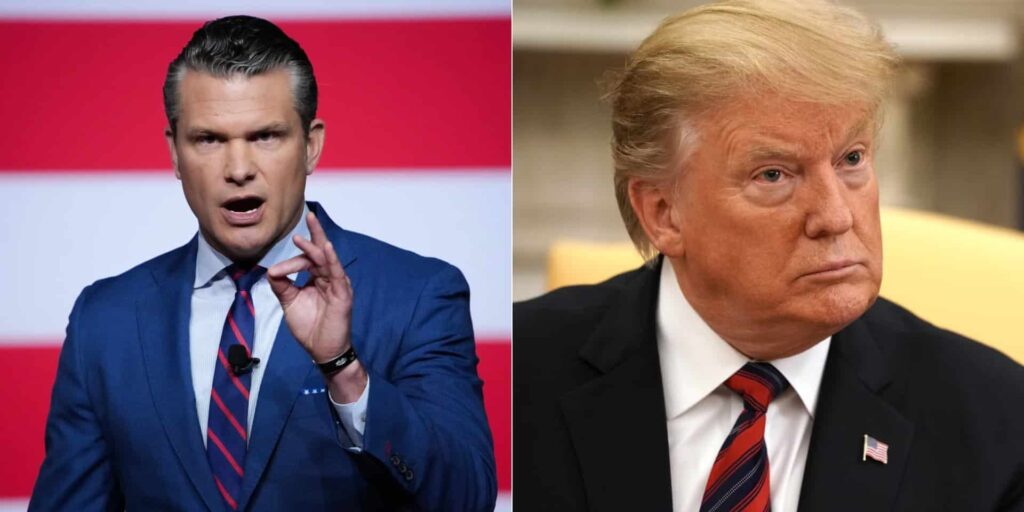
In Washington, D.C., a senior U.S. congressman delivered a pointed and unambiguous message to the government of Nigeria: do not test the resolve of Donald Trump. The warning comes amid a sharp escalation in rhetoric from the U.S. President toward Nigeria, centering on claims of systemic mistreatment of Christians — and including the suggestion of possible sanctions or even military intervention, according to reports from AP News.
This development spotlights how U.S. domestic politics are increasingly intersecting with Nigerian affairs and how policy toward Nigeria may be subject to rapid, high-stakes shifts depending on how Abuja responds. The congressman’s statement underscores that Nigeria’s internal decisions on security and human rights are now carrying consequential foreign-policy ramifications.
President Trump has publicly declared that Nigeria could face serious consequences if the government does not halt what he described as the killing of Christians “in very large numbers.” On his way back to Washington aboard Air Force One, he responded to a reporter’s question by saying, “Could be. I mean, other things … we’re not going to allow that to happen.”
On November 1, 2025, the White House announced that Trump had instructed the Department of Defense to prepare for possible military action in Nigeria. At the same time, he threatened to immediately cut all U.S. aid to Nigeria if what he alleged as “mass slaughter” of Christians continued. The country was also placed back on the U.S. “Country of Particular Concern” list for religious-freedom violations, according to AP News.
The Nigerian government, led by President Bola Ahmed Tinubu has pushed back hard, rejecting characterisations of religious intolerance and insisting that the country protects all citizens irrespective of faith. A senior adviser noted that Nigeria welcomes assistance but emphasized the need for its territorial integrity and sovereign decision-making to be respected.
The stakes for Nigeria are high. The country must navigate a delicate balance between addressing internal security and human rights issues while avoiding actions that could trigger U.S. sanctions or worse direct intervention. The Trump administration’s rhetoric has raised alarm among Nigerian policymakers and analysts, some of whom warn that the notion of U.S. military involvement threatens both sovereignty and domestic stability. For its part, the U.S. appears poised to treat Nigeria less as a bilateral partner and more as a potential target for coercive diplomacy unless changes are made.
U.S. policy toward Nigeria appears to be shifting suddenly and sharply under pressure from domestic U.S. political dynamics, especially around religious-freedom issues. Nigeria had previously been removed from the CPC list; its re-listing signals a tougher posture. For Nigeria, the message is clear: internal policy decisions on religion, security, and human rights now carry international ramifications. The threat is not only about aid or sanctions — it encompasses possible military involvement, which strikes at sovereignty.
Observers warn that if Nigeria is seen as vulnerable to foreign coercion, it could affect investor confidence, diplomatic relations, and the government’s ability to manage its own security agenda. Additionally, the rhetoric around targeted killings of Christians risks inflaming religious polarisation inside Nigeria, complicating the government’s efforts to unify communities and fight insurgency across multiple regions.
Analysts suggest several steps for Nigeria to manage the evolving scenario: increase transparency on security operations and killings; strengthen protections for religious freedom, not just in rhetoric but in tangible action; engage in proactive diplomacy through high-level meetings with Washington to clarify policies; and reinforce internal security strategies that address violence as a complex issue involving terrorism, banditry, and resource conflict rather than solely a religious crisis.
The blunt congressional warning to the Nigerian government, backed by a U.S. President prepared to weigh military options marks a significant moment in bilateral relations. For Nigeria, the event serves as both a cautionary signal and an impetus: how the government responds may determine whether it remains a cooperative partner or becomes a flashpoint. Either way, the intersection of religion, security, diplomacy, and U.S. domestic politics has placed Nigeria firmly in the global spotlight.