
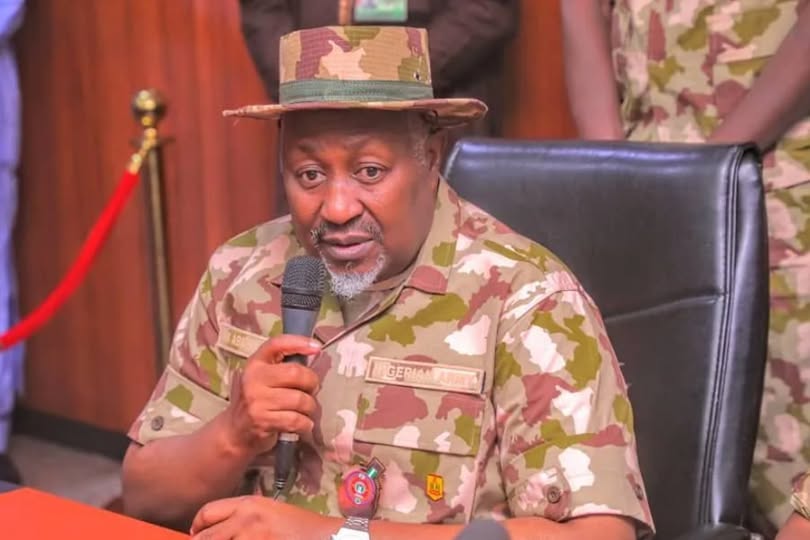
Nigeria’s political landscape was jolted by the immediate resignation of the Minister of Defence, Alhaji Mohammed Badaru Abubakar, a high-profile exit that has been officially attributed to “health grounds” but which has simultaneously ignited fervent speculation about an imminent, wide-ranging security shake-up within President Bola Ahmed Tinubu’s administration. The resignation comes at a particularly sensitive moment mere days after the President declared a national security emergency in response to the escalating crisis of mass kidnappings and terrorism across the country. This timing strongly suggests a correlation between the Minister’s departure and the mounting pressure for tangible results in the fight against insecurity.
Badaru Abubakar, 63, a former two-term Governor of Jigawa State (2015–2023), was a key appointment in the Tinubu cabinet, taking charge of the critical Defence portfolio in August 2023. His tenure, though brief, has been marked by a continuous struggle to contain the converging threats of Boko Haram, ISWAP, banditry, and communal violence. While the official statement from the Presidency accepted the resignation and cited medical reasons, political observers and security analysts are largely viewing the move as a strategic necessity, a sacrifice made amid a clear failure to secure substantial improvement in the national security index. This narrative is reinforced by the public’s heightened anger and the international community’s spotlight on the recent spate of school abductions.
The speculation surrounding the vacancy intensified immediately with unconfirmed reports suggesting that the former Chief of Defence Staff (CDS), General Christopher Musa, is a strong candidate for the post. General Musa, who was recently relieved of his appointment as CDS under a broader military reshuffle, has been credited with leading significant restructuring and modernization efforts within the military and was renowned for his effective counter-insurgency operations in the North-East under Operation Hadin Kai. His potential return in a ministerial capacity is seen as a move to inject deep, operational military expertise directly into the political leadership of the defence establishment, replacing a purely political appointee with a technocrat focused on security execution.
This dynamic illustrates a shift in the administration’s perceived priorities. Placing a security veteran like Musa if the speculation proves true—at the helm of the Defence Ministry would signal a recognition by President Tinubu that the current moment demands more than political management; it requires aggressive, tactical, and military-informed policy direction. The resignation of Badaru, regardless of the official “health grounds,” acts as a political release valve, allowing the President to reorganize and implement the necessary changes to rescue his administration’s credibility on security matters. The President’s declaration of a national security emergency is expected to be elaborated upon further, and a new, capable Defence Minister would be essential to executing such a wide-ranging, ambitious security mandate.
The resignation serves as a potent reminder of the high-stakes accountability in governance, especially in the security sector. As the nation scrambles to respond to both domestic terror and increasing international scrutiny, the focus is now squarely on President Tinubu to swiftly appoint a successor who can inspire confidence, effectively coordinate the armed forces, and ultimately deliver on the promise of security to a long-suffering populace. The next appointment will be a true litmus test of the President’s commitment to prioritizing national safety over political patronage.