
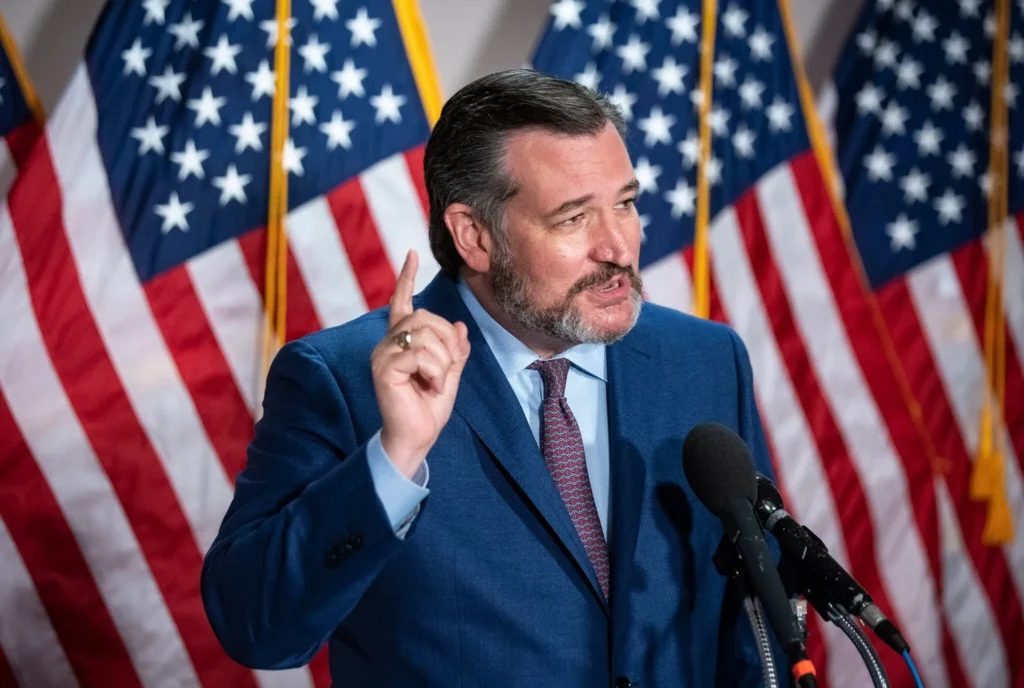
U.S. Senator Ted Cruz (R-Texas) has reaffirmed his commitment to advancing legislation aimed at holding Nigerian officials accountable for enforcement of blasphemy and Sharia laws, a measure that may significantly alter U.S.-Nigeria relations. The bill, titled the Nigeria Religious Freedom Accountability Act of 2025 (S. 2747), was introduced on September 9, 2025 and referred to the Senate Foreign Relations Committee.
What the legislation proposes
- The Act would require the U.S. Secretary of State to designate the Federal Republic of Nigeria as a “Country of Particular Concern” (CPC) under the International Religious Freedom Act of 1998, signalling that Nigeria is engaged in or tolerates “systematic, ongoing, and egregious violations of religious freedom.”
- It mandates that within 90 days of enactment, and annually thereafter, the Secretary of State submit a report listing Nigerian individuals, federal or state officials, governors, judges or law enforcement authorities who have (a) promoted, enacted or maintained Nigerian blasphemy laws, or (b) enforced them (through prosecution, conviction, deprivation of liberty) or tolerated violence by non-state actors invoking religious justifications.
- Once individuals are identified, the U.S. President would apply sanctions described under Executive Order 13818 (which blocks property of persons involved in serious human-rights abuse or corruption) to those persons.
- The bill also calls for the designation of Boko Haram and Islamic State West Africa Province (ISWAP) as “Entities of Particular Concern” (EPC) and strengthens U.S. monitoring of blasphemy law enforcement across Nigeria.
In his own words, Senator Cruz stated:
“Nigerian Christians are being targeted and executed for their faith by Islamist terrorist groups, and are being forced to submit to sharia law and blasphemy laws across Nigeria. It is long past time to impose real costs on the Nigerian officials who facilitate these activities.”
Implications and reactions
Supporters’ Viewpoint
Advocates for the legislation argue that Nigeria has become perilously unsafe for religious minorities and that the U.S. must use diplomatic and financial levers to compel change. The bill is seen as a way to:
- Hold individual Nigerian officials personally accountable for human-rights abuses, rather than limiting action to broad statements or general aid.
- Reinforce religious-freedom norms that the U.S. has long championed, and use targeted sanctions as a credible signal of those norms.
- Provide victims of religious-based violence in Nigeria with a measure of international recognition and pressure on the Nigerian government to act.
Critics’ Viewpoint
On the other side, Nigerian officials and some analysts caution that the legislation risks undermining Nigeria’s sovereignty and oversimplifies the country’s complicated security and governance challenges:
- The government of Nigeria has rejected claims of genocide or state-sponsored religious targeting, asserting that the violence is driven by terrorism, banditry and communal conflict, affecting both Christians and Muslims.
- Some observers argue that framing the crisis purely in religious terms ignores broader issues such as land-use conflict, ethnic mobilisation, state capacity failure, and climate-driven migration. The Council on Foreign Relations notes the risk of mischaracterising Nigeria’s complex security landscape.
- There is concern that sanction threats and external pressure might hamper cooperation on broader security issues (terrorism, insurgency, migration) and alienate Nigeria from U.S.-led or multilateral initiatives.
Diplomatic Risks and Opportunities
For Nigeria, the bill raises immediate diplomatic questions:
- If passed, Nigeria could face real consequences: reduced U.S. assistance, visa restrictions on implicated officials, asset freezes, and heightened international scrutiny.
- Nigeria’s government may feel compelled to engage more deeply with U.S. lawmakers and international institutions to influence the narrative, clarify its actions, and potentially negotiate conditionality or carve-outs.
- The U.S. message is clear: internal policy decisions about blasphemy laws, religious enforcement, and human-rights protections now carry foreign-policy ramifications.
Why this matters
- Shift in U.S. leverage: The legislation signals a move toward individual accountability (targeted sanctions) rather than just state-level engagement, increasing pressure on Nigeria’s state and non-state actors alike.
- Image & governance nexus: For Nigeria, managing its international image is now tied to governance and security outcomes. How the country responds could influence investor confidence, foreign-assistance flows, and bilateral partnerships.
- Complex conflict environment: The backdrop of the bill is Nigeria’s multi-dimensional security crisis — insurgency, communal violence, terrorism, Sharia enforcement, inter-ethnic farmer/herder clashes meaning any policy response must be equally nuanced.
- Precedent setting: The legislation could set a precedent for U.S. action in other countries where religious freedom, blasphemy laws and state complicity are at issue — raising questions about sovereignty, external pressure and normative exports.
What happens next
- The bill remains under committee review. Senate debate, potential amendments and House alignment will determine its passage prospects.
- Nigeria’s executive and legislative branches will likely step up diplomatic outreach to the U.S., engage with religious-freedom organisations and civil society, and prepare response strategies both substantive (policy change) and narrative (public relations).
- Nigerian policymakers may need to address enforcement of blasphemy laws, carry out transparent investigations of religious-based violence, publish relevant data, and engage with civil-society stakeholders to signal responsiveness.
- From a communication standpoint, Nigeria will need to balance defending its sovereignty with acknowledging legitimate concerns, showing transparency, and proposing reform pathways, thereby avoiding a purely defensive posture.
In sum, Senator Ted Cruz’s push with the Nigeria Religious Freedom Accountability Act of 2025 marks a pivotal moment in U.S.–Nigeria relations. The bill elevates religious-freedom concerns to the fore of bilateral diplomacy, signalling that Nigeria’s internal legal frameworks and enforcement practices may now become a matter of external consequence. How Nigeria responds — through policy, diplomacy and governance reform — will influence not just its image, but its autonomy in managing its own security and human-rights agenda.