
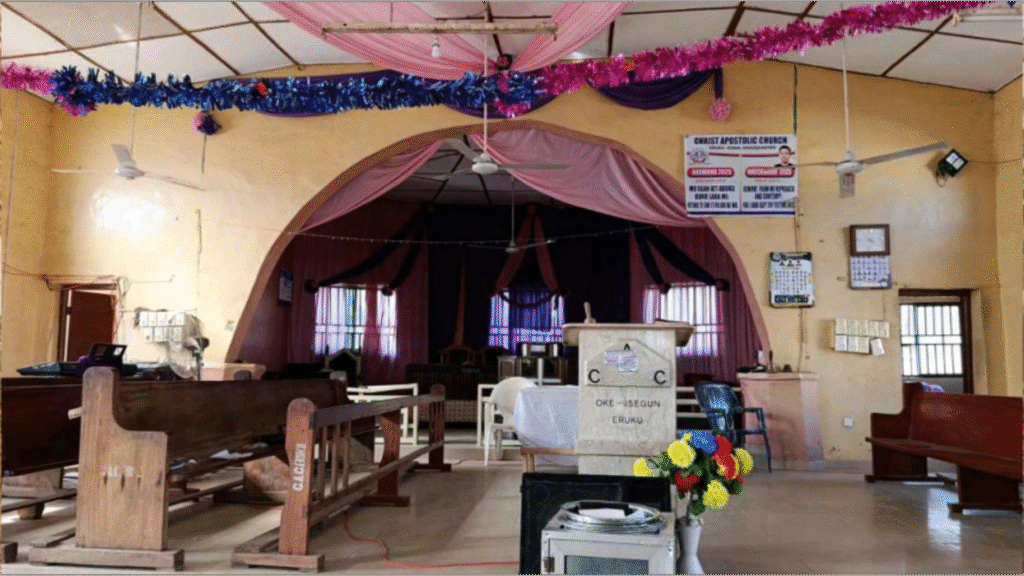
A brutal kidnapping has shaken Kwara State after gunmen stormed the Christ Apostolic Church (CAC) in Eruku, abducting 38 worshippers during an evening service. Disturbing reports now indicate that the attackers have demanded a staggering ₦100 million per person, bringing the total ransom demand to ₦3.8 billion.
Eyewitness accounts and community leaders say the assailants arrived in force, opening fire on congregants before dragging dozens into waiting vehicles. Five individuals were reportedly killed in the initial attack, adding a grim tone to a crime that has left the community shaken and desperate for answers.
Chief Olusegun Olukotun, the traditional leader known as the Olori Eta of Eruku, confirms that the kidnappers have contacted relatives, grouping victims by family ties and issuing demands via phone. He narrowly escaped the assault himself after fleeing through a window with one of his wards—a harrowing ordeal that highlighted the vulnerability of his community.
“They grouped our people according to families, and they are calling each group, telling them what they want to pay,” Chief Olukotun said in a phone interview.
The ransom demand has sparked outrage across social media and prompted urgent calls for tougher security measures. Many residents are calling on security forces to launch an all-out rescue mission, while others are questioning how a rural church could be so severely targeted without adequate protection.
Governor AbdulRahman AbdulRazaq has condemned the abduction, pledging that government forces will intensify efforts to secure the victims’ release. However, critics are already raising concerns about slow response times in past incidents and whether the state has learned from previous failures.
Security analysts argue that this kidnapping is more than a random act of violence—it reflects the growing sophistication of bandit groups, who now demand astronomical sums and operate with boldness in previously calm rural communities. The pattern, they warn, suggests a criminal ecosystem that views mass abductions not just as a crime, but as a business.
Local vigilantes have pledged to support security agencies in any rescue attempt, but residents say they need better coordination, early-warning systems, and sustained protection to avoid similar tragedies in the future.
Meanwhile, churches across Kwara and neighbouring states are reviewing their security protocols. Leaders say they will not allow fear to silence their ministries, but many admit they are grappling with how to balance open worship with risk mitigation.
As the standoff continues, the kidnappers’ demand looms large not just as a financial number, but as a test of government capacity, community resilience, and the cost of faith in a country beset by insecurity.