
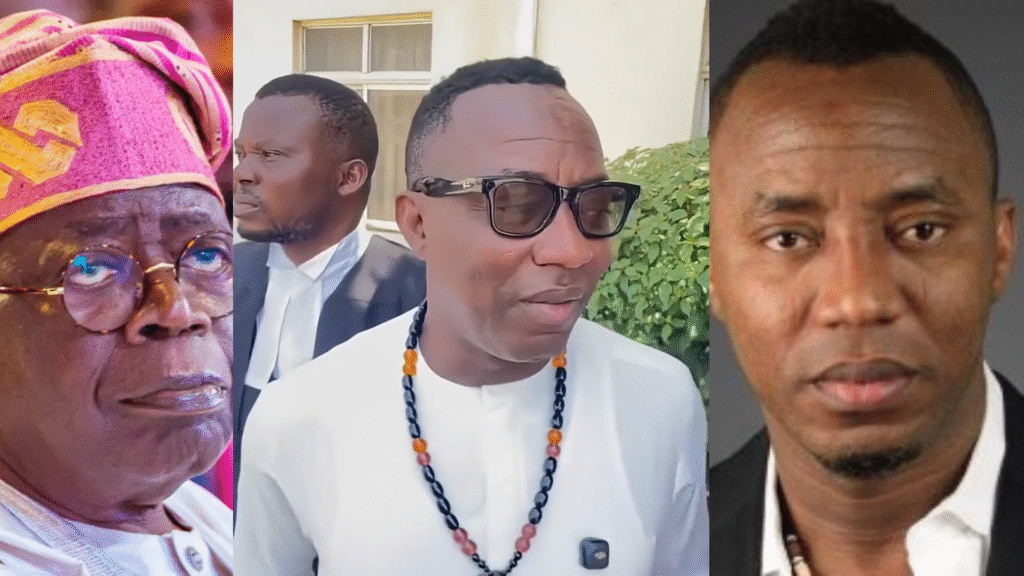
Human rights activist and former presidential candidate Omoyele Sowore has launched a scathing attack on President Bola Ahmed Tinubu, accusing him of “dangerous cluelessness,” failed leadership, and a covert 2027 political obsession despite Nigeria’s escalating insecurity. Sowore’s criticism comes amid a wave of mass kidnappings, rising violence, and what many Nigerians perceive as a worsening national security crisis.
In a viral statement, Sowore said Tinubu’s administration has “lost control” of the country, arguing that the president appears more focused on political positioning than addressing the realities Nigerians face daily. He accused the president of “talking tough but doing nothing,” adding that insecurity has grown worse under his watch.
Sowore also alleged that Tinubu’s advisers are misleading him with cherry-picked reports and staged appearances that do not reflect the level of chaos on the ground. According to Sowore, the presidency is “living in a bubble,” detached from the pain of citizens who face kidnappers, extortionists, and terrorists on a near-daily basis.
The activist further accused Tinubu of plotting ahead of the 2027 elections, suggesting that political calculations are influencing decisions on security appointments, crisis messaging, and state visits. He criticised the president for prioritising “political consolidation” over the protection of Nigerians.
Public reactions to Sowore’s comments have been divided. Supporters praised him for speaking boldly, saying Nigerians need voices that hold leaders accountable. Critics, however, said Sowore is exploiting national frustration to stay politically relevant.
Political analysts say Sowore’s remarks tap into the widespread disappointment among citizens who expected Tinubu to implement rapid reforms. Instead, many Nigerians are now dealing with rising food prices, fuel inflation, kidnappings, and economic hardship, fuelling deeper resentment.
The presidency has not officially responded, but senior aides privately dismissed Sowore’s claims as “cheap activism.” One presidential ally described Sowore as someone who “thrives on chaos” and predicted his attacks would intensify as the political season approaches.
However, observers warn that dismissing criticism without addressing the grievances of citizens could deepen the trust deficit between the government and the people. Nationwide protests, political agitation, and growing calls for security reform reflect the urgency of the moment.
Sowore also challenged the president to implement sweeping security reforms, including decentralised policing, modernised intelligence systems, anti-kidnapping task forces, and transparent oversight of defence budgets. He argued that Nigeria cannot continue spending trillions on security with little to show for it. Whether viewed as activism or political provocation, Sowore’s comments highlight a growing frustration that cuts across party lines. As insecurity worsens, Nigerians increasingly demand solutions not promises.