
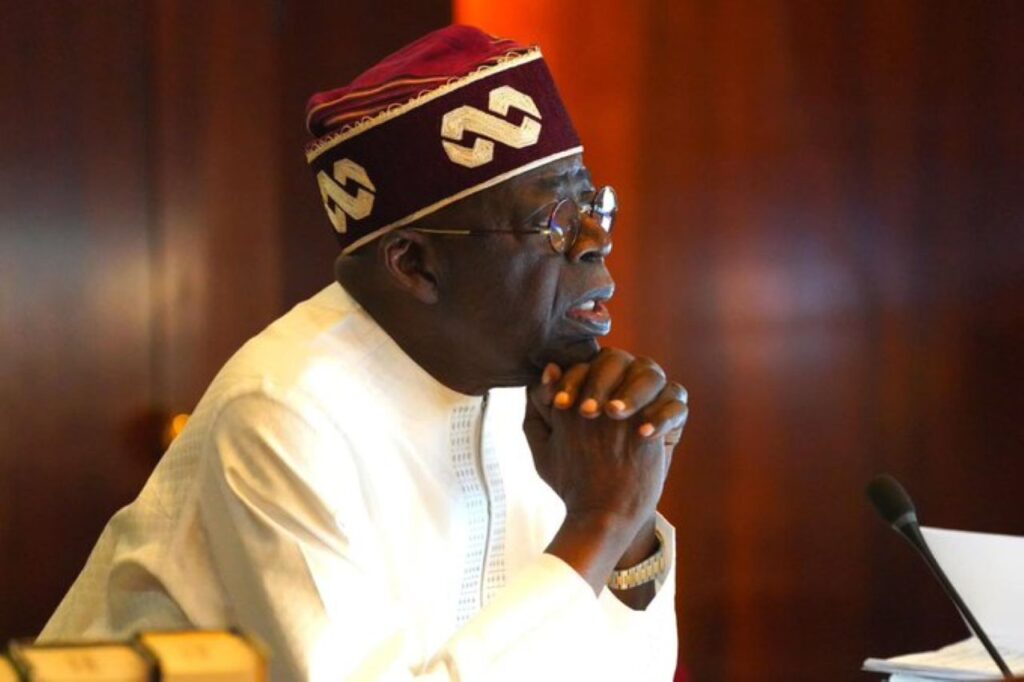
President Bola Ahmed Tinubu has reaffirmed his administration’s commitment to restoring security across the nation, stating that the federal government is “closely monitoring” the surge in abductions that have shaken several communities. From Zamfara to Niger, Kwara and parts of the South-East, the past two weeks have witnessed intensified kidnappings, prompting renewed panic and calls for urgent action.
In a statement issued by the Presidency, Tinubu described the abduction crisis as “unacceptable and deeply troubling,” assuring Nigerians that the government is deploying both kinetic and non-kinetic strategies to rescue victims and dismantle kidnapping networks. According to the President, security agencies have been directed to adopt rapid-response tactics and expand surveillance in hotspots where armed groups have intensified operations.
State House insiders reveal that Tinubu has been receiving hourly updates from the National Security Adviser, Defence Headquarters, and key intelligence units. This marks one of the most coordinated tracking efforts since the administration took office. The President reportedly held late-night meetings with service chiefs in the past 48 hours, insisting that the kidnappings must be addressed decisively.
The ongoing crisis has drawn public anger, especially after mass abductions in Niger and Kebbi states, as well as a church attack in Kwara. Citizens and civil society groups argue that the rate of kidnappings signals a more organised and lucrative criminal enterprise, with kidnappers now operating in clusters across multiple states.
Security analysts say the President’s decisive tone is necessary but warn that implementation is key. Many experts believe that Nigeria’s security architecture remains overstretched, under-equipped, and vulnerable due to weak intelligence coordination. They also argue that the failure of some local authorities to act on actionable intelligence has contributed to recent tragedies.
Communities across northern and central Nigeria have intensified calls for regional policing, arguing that national response systems are too slow and too distant to counter rapidly evolving threats. Traditional rulers have joined the debate, with several urging the President to consider bold reforms to security decentralisation.
The Presidency insists that military operations are underway, including aerial reconnaissance and forest combing strategies. But critics argue that without long-term solutions—addressing poverty, illicit weapons flow, ransom payments, and porous borders—the current approach may only offer temporary relief.
As families of kidnapped victims anxiously await news, the President’s promise has raised expectations. Whether the government can meet them remains to be seen. For now, Tinubu’s message to the nation is clear: “Nigeria will not surrender to criminality.”