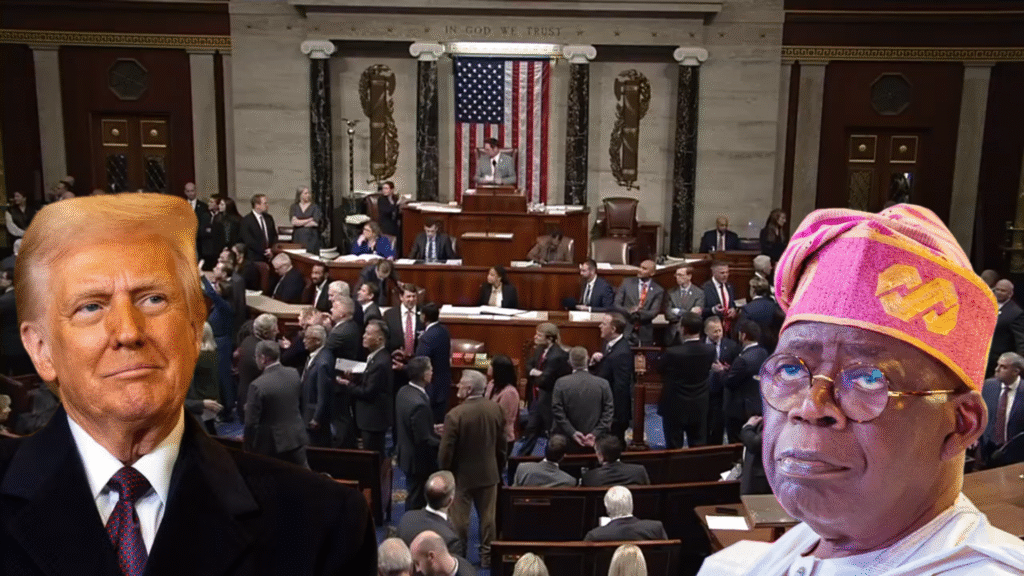
Nigeria is once again in the global spotlight as a new U.S. House Committee report and former President Donald Trump’s renewed push to return Nigeria to the Countries of Particular Concern (CPC) list have triggered intense diplomatic pressure. The CPC designation reserved for nations accused of severe religious freedom violations carries the possibility of sanctions, restricted military cooperation, and economic consequences.
Allegations in the U.S. House Committee Report
The House Committee report, released after months of investigation, alleges that Nigeria has failed to protect vulnerable religious communities, especially Christians in northern and Middle Belt regions. It cites widespread killings, village attacks, kidnappings, and church burnings, arguing that the Nigerian government’s response has been slow, inconsistent, or inadequate.
Trump’s Renewed Push for CPC Reinstatement
Trump, in a recent public address, echoed the findings, saying Nigeria should be reinstated on the CPC list “immediately.” His remarks have resurfaced debates on whether his previous administration was justified in placing Nigeria on the list in 2020, a decision reversed by the Biden administration in 2021.
Potential Consequences for Nigeria
The renewed push has sparked concerns within Nigeria’s political and diplomatic circles. Foreign policy analysts warn that if Nigeria returns to the CPC list, the country could face:
● Visa bans on senior officials
● Reduced military aid
● Targeted sanctions
● Stricter human rights monitoring
● Increased congressional scrutiny
Nigeria’s Response
The Nigerian Ministry of Foreign Affairs dismissed the report, calling it “biased, unbalanced, and influenced by external lobby groups with political agendas.” Officials insist that the government has made significant efforts to combat terrorism and protect communities irrespective of faith.
Critics Challenge Government’s Claims
However, critics say government statements do not match realities on the ground. Numerous states, especially Plateau, Kaduna, Benue, Taraba, and Zamfara, continue to experience relentless attacks by armed groups. Churches and Christian settlements have recorded thousands of deaths over the last decade.
Human Rights Concerns
Human rights defenders warn that the Nigerian government’s defensive posture may worsen relations with the U.S. Instead, they urge authorities to present clear data-driven action plans, including prosecutions of perpetrators, improved intelligence operations, and stronger community partnership mechanisms.
Reactions From Religious Groups
Meanwhile, religious groups have reacted strongly to the report. The Christian Association of Nigeria (CAN) says the findings validate longstanding complaints that the government has refused to acknowledge the scale of Christian-targeted killings. Muslim groups, however, argue that the violence affects all communities and accuse Western observers of ignoring attacks on Muslims.
A Delicate Diplomatic Balancing Act
As tensions escalate, the Nigerian government faces a difficult balancing act: defend its sovereignty while acknowledging global concerns and demonstrating visible improvements in internal security.
Looking Ahead
For now, Washington appears determined to maintain pressure until Nigeria proves measurable progress.